Your brain already knows how to synchronise movement to rhythm.
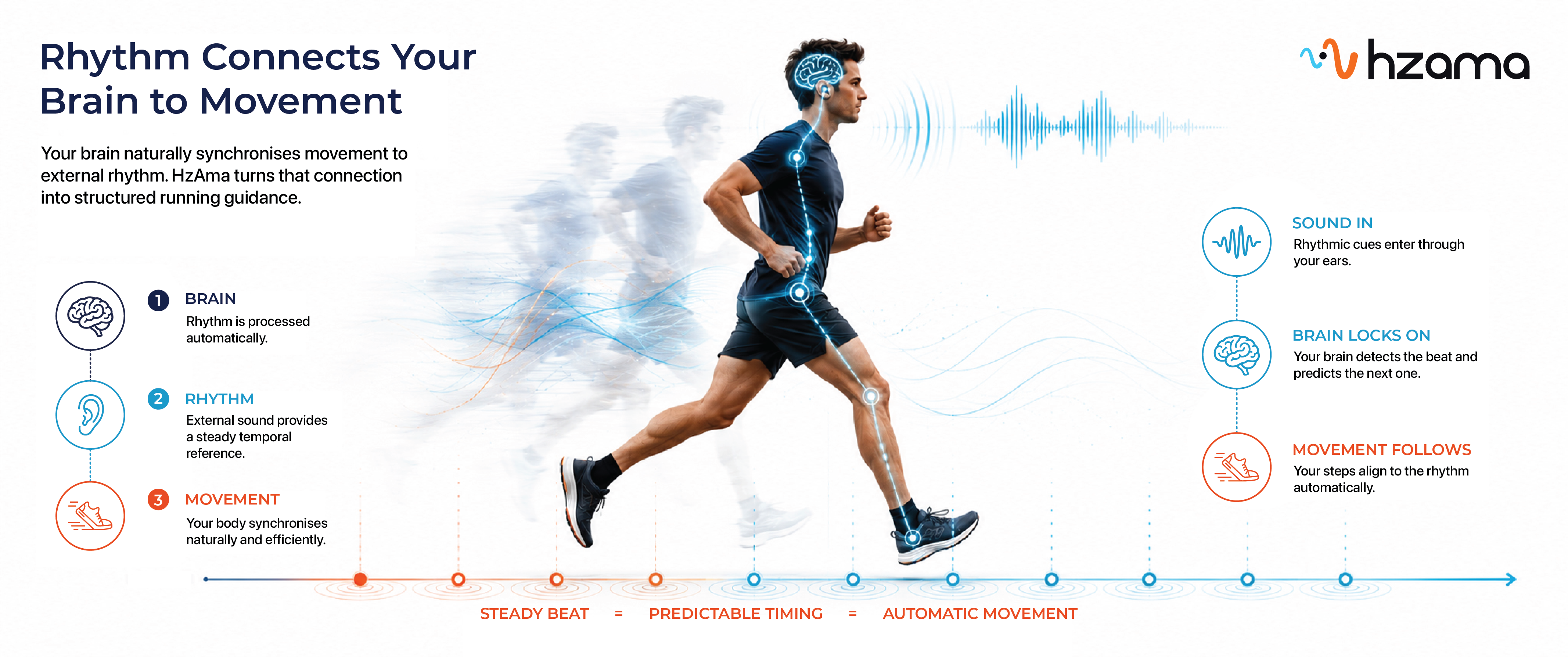
Humans instinctively match repetitive movement to external rhythm.[2][4] You naturally walk in step beside someone else. The right song can suddenly make running feel effortless.
HzAma applies that synchronisation principle by providing a beat at the runner’s target cadence, reducing the need to count steps consciously.[4]
Small cadence changes create meaningful mechanical improvements.
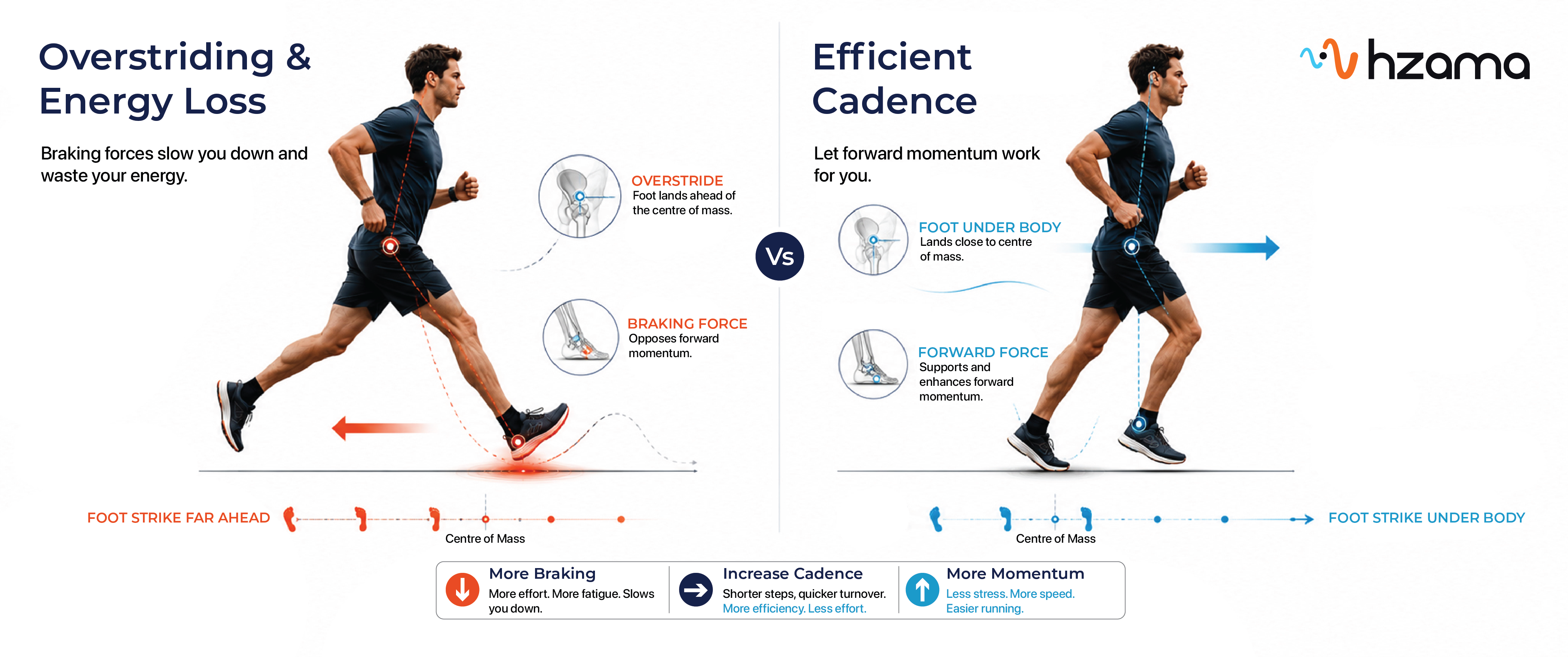
Overstriding is common in recreational running, but it should not be assumed from cadence alone.[1][5] When it occurs, the foot lands too far in front of the body, creating braking force, wasted energy, and additional joint loading with every step.[1]
Research shows that modest step-rate increases at a constant speed can shorten step length and reduce several hip and knee loading measures. Effects on running economy are more individual and should not be presented as automatic.[1][4][5]
Rhythm changes how movement feels.
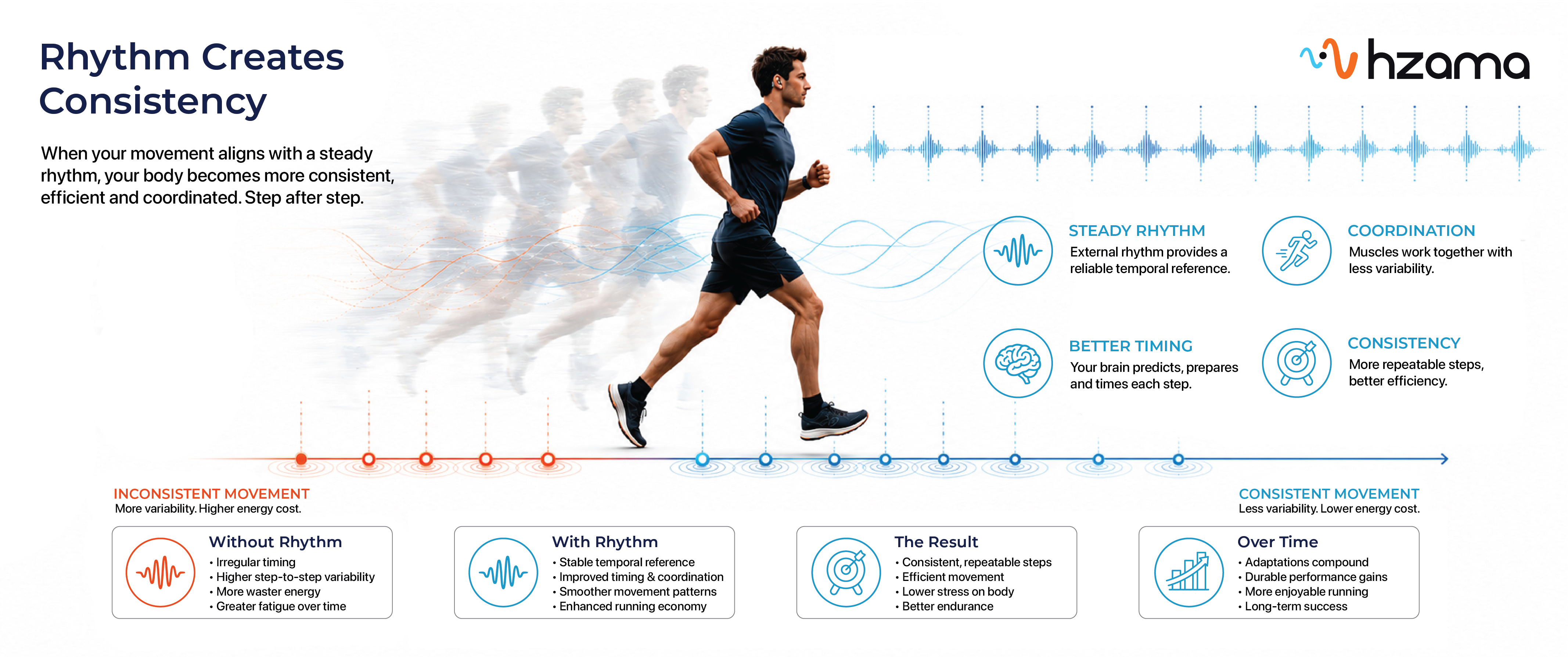
External rhythm improves movement consistency, timing, and coordination.[2][4] Originally explored in rehabilitation, rhythmic cues produced measurable improvements in gait velocity, stride length, and cadence.[2]
In Bood et al.’s treadmill study, cadence-synchronised audio was associated with improved time to exhaustion and lower oxygen consumption at a given workload; the authors examined both synchronisation and motivational effects.[4]
Why easy training matters.
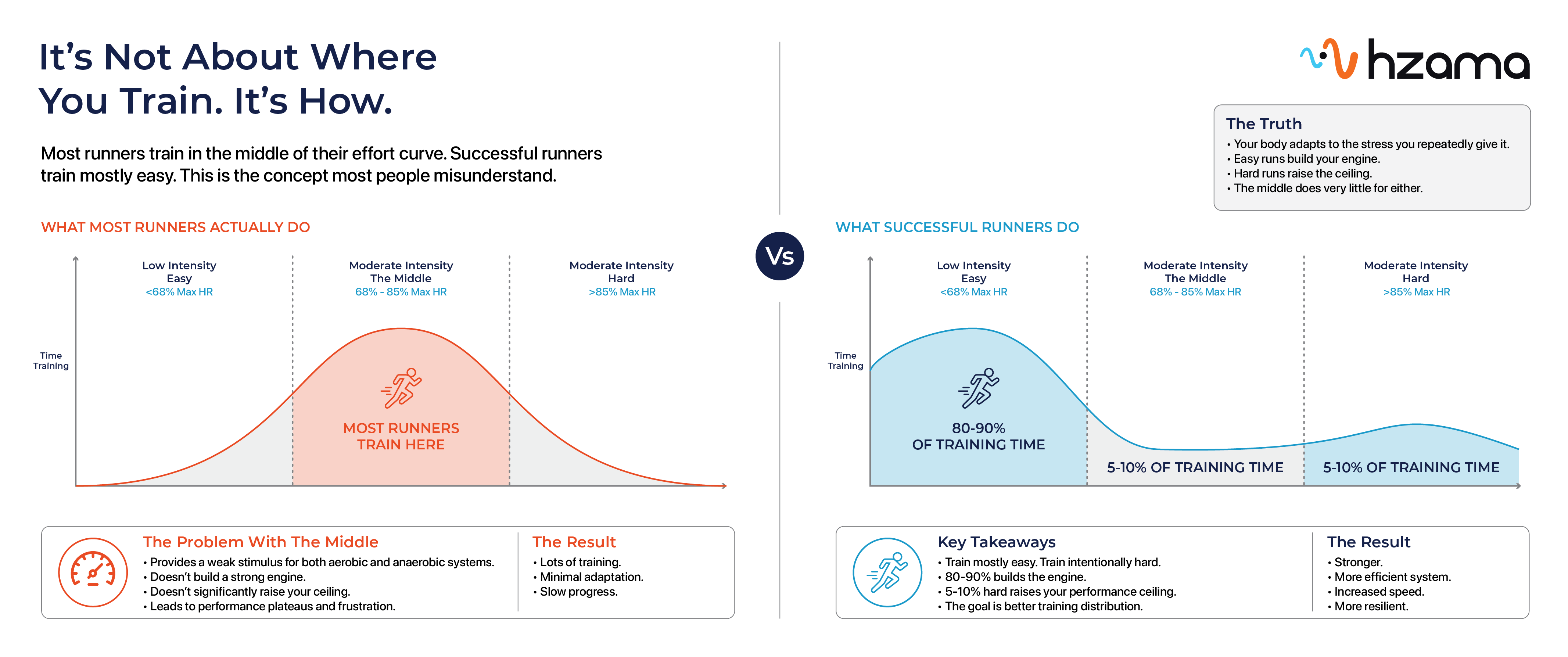
A 2014 study of 48 well-trained endurance athletes found the polarised group improved the most across several key performance measures over nine weeks.[3] Polarised training broadly means mostly low intensity, occasional high intensity, and comparatively little in between.
Recreational runners often drift into moderate effort — too hard to recover properly, too easy to maximise adaptation.[3] HzAma can give you a consistent cadence reference within a session; effort still needs to be judged using the session goal and how you feel.
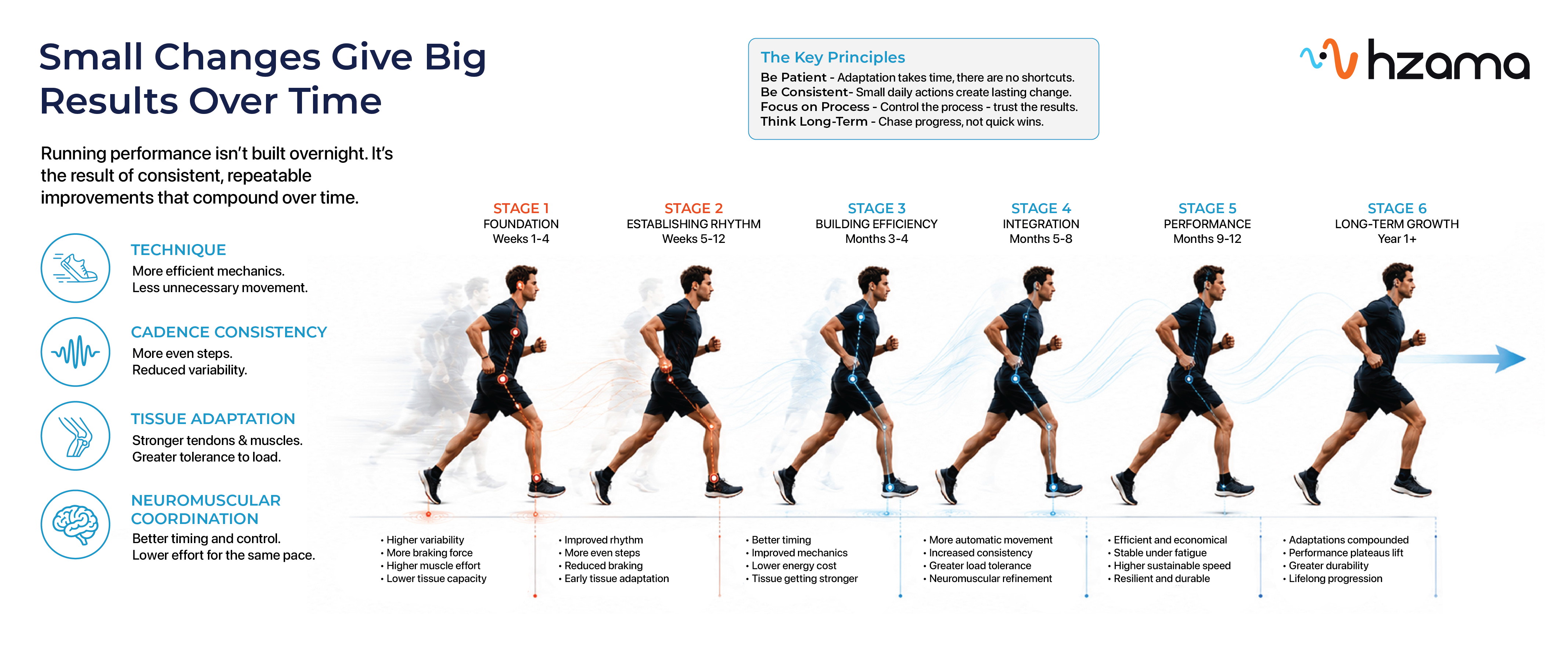
Efficient movement is learned gradually.
The body adapts to movement patterns over time — tendons, muscles, neuromuscular coordination, and mechanical timing all develop together.[5]
HzAma develops cadence gradually rather than forcing sudden changes. Sustainable improvement over months and years, not hacks.[5]
